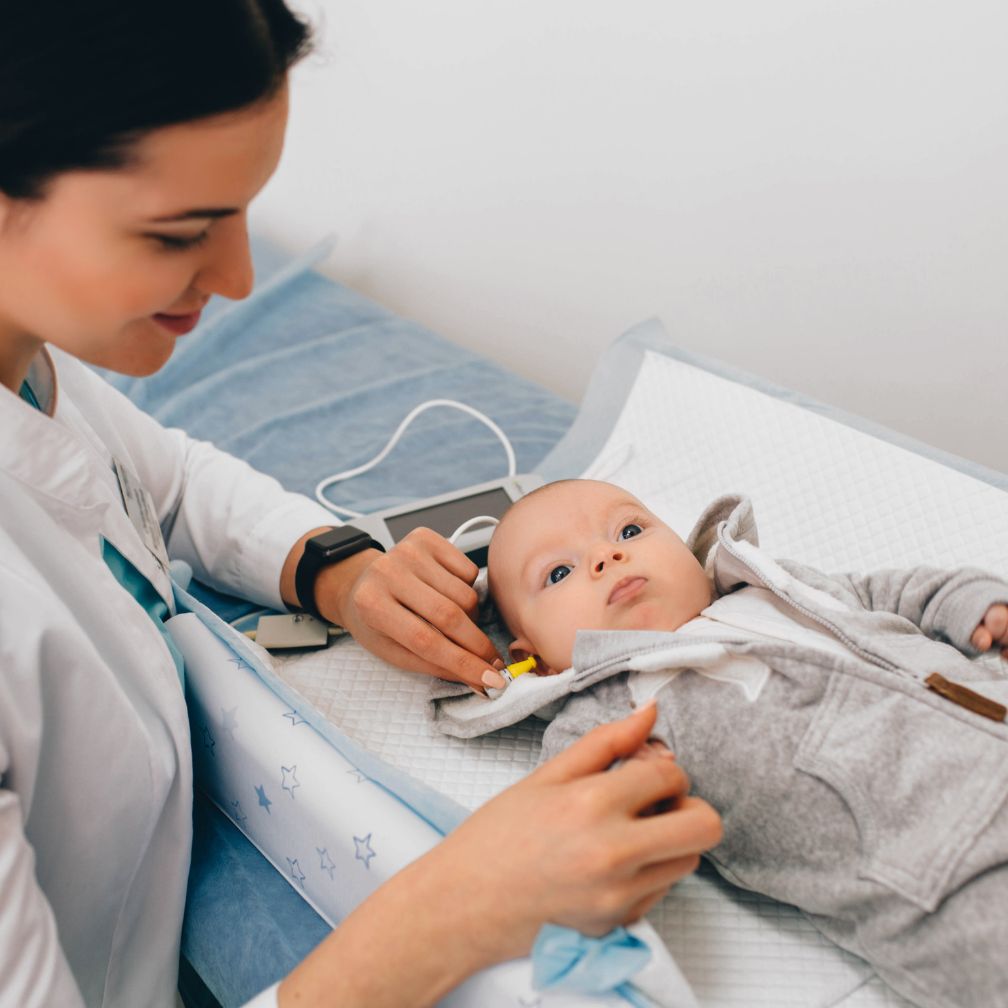
For guardians of newborns, learning that a child presents a hearing difficulty frequently produces immense mental exhaustion. Fortunately, the hopeful truth is: thanks to rapid diagnosis and early treatment, babies with hearing impairment will effortlessly thrive. Unquestionably, such infants can develop spoken language, interpersonal skills, and solid relationships across their world, realizing a wonderful life!
Employing wearable hearing aids or internal cochlear implants creates two distinct medical options for assisting infants with auditory challenges. In the following breakdown, we analyze their basic functions and explain how to choose the proper device for your child.
Unpacking the Foundations of Infant Hearing Loss
Hearing impairment in newborn infants can stem from several potential sources, including:
- Distinct inherited genetic traits (even if family records show no precedent)
- Active congenital infections like cytomegalovirus (CMV) or German measles
- Obstetric complications, including systemic oxygen lack or low birth weight
- Specific medications used in specialized neonatal intensive care
Which step demands immediate priority? Rapid clinical identification. Because of this, newborns in American medical centers receive auditory checks before heading home. Certified pediatric audiology experts adhere strictly to the official “1-3-6” operational timeline:
- Initial hearing check administered prior to 1 month of age
- Confirmed hearing diagnosis established within 90 days of life
- Active management (incorporating hearing technology or specialized rehabilitation) started within 180 days of life
Attaining these developmental checkpoints provides infants their most promising outcome regarding speech acquisition, language mastery, and intellectual development. Should you seek further counsel surrounding screening protocols, your child’s pediatrician will gladly guide you!
Pediatric Hearing Aids for Young Babies
Regarding babies affected by mild to severe hearing loss, prescription hearing aids generally function as the premier solution. These lightweight ear-level units intensify acoustic waves, empowering infants to catch spoken dialogue and natural environmental sounds much more effectively.
Custom infant-adapted hearing aids act as:
- Uniquely safe for use on newborns aged just a few weeks
- Crafted featuring soft, gentle, flexible ear molds that adapt as the baby matures
- Outfitted with secure, tamper-resistant battery latches and child-focused protective mechanisms
- Expertly tuned by a pediatric audiology specialist to match your baby’s exact hearing needs
As your baby grows, hearing aids necessitate regular clinical recalibrations to ensure snug placement and precise amplification.
Cochlear Implants for Infants
Should an infant present with severe to profound sensorineural deficits and demonstrates limited success with standard amplification, medical teams often recommend a cochlear implant. Unlike standard acoustic hearing devices, cochlear implant systems:
- Require precision surgical implantation to bypass damaged ear structures
- Route directly past damaged cells inside the inner ear
- Translate environmental sound into electrical signals that excite the acoustic nerve pathways directly
State-of-the-art cochlear systems function as:
- Formally cleared by the FDA for pediatric patients as young as 9 to 12 months
- Remarkably effective when paired with early auditory-verbal therapy and consistent family engagement
- Prescribed solely after complete multi-disciplinary testing by an expert audiologist and ENT surgeon
This evaluative framework encompasses radiological imaging, advanced hearing evaluations, and open dialogue concerning long-term communicative results.
Hearing Aids or Cochlear Implants: Distinguishing Features
- Mild to severe hearing loss relies on Hearing Aids; Severe to profound levels of loss demand Cochlear Implants
- Non-Invasive external placement: Hearing Aids; Surgical internal implantation: Cochlear Implants
- Acoustic volume boosting: Hearing Aids; Electrical signal stream conversion: Cochlear Implants
- Usage can begin in early infancy: Hearing Aids; Surgery can begin at 9-12 months: Cochlear Implants
Final Conclusions: Selecting the Right Path for Your Infant
Should your baby receive a formal hearing loss diagnosis, you can rely on excellent technological options and robust community resources exist to help you. With the help of pediatric hearing specialists, most children construct language skills that are on par with their peers.
No matter if your infant proves better suited for conventional hearing aids or advanced cochlear implants, prompt intervention creates a profound lifelong advantage.
Are you looking for clarity regarding your infant’s hearing development? Call our clinic today to receive a complete diagnostic assessment and personalized rehabilitation plan.